

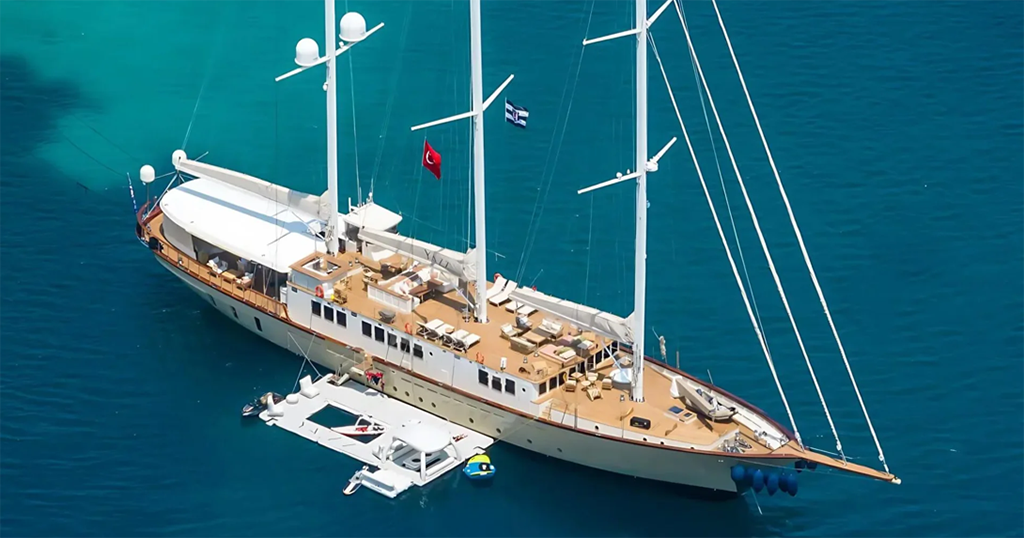
Classic vs. Modern, A Visual Guide to Turkish Gulet Types

A Visual Guide to Turkish Gulet Types
From traditional fishing boats to luxury floating hotels — explore the evolution of the iconic Turkish gulet.
Turkish guletclassic guletmodern guletgulet typesblue cruise turkeystandard guletluxury guletultra deluxe guletBodrum guletschooner vs guletwooden yacht
🖼️ [VISUAL GUIDE] Evolution of Turkish Gulet: Classic vs Modern Silhouettes
What is a Gulet? Origins & Character
The gulet (pronounced goo-let) is a traditional wooden sailing vessel originating from the southwestern coast of Turkey, particularly the shipyards of Bodrum, Marmaris, and Fethiye Historically used for fishing, sponge diving, and cargo transport, the gulet evolved over millennia from ancient Carian and Phoenician designs . Its name likely derives from the Italian goletta or French goélette, meaning schooner. Characterized by a broad beam, rounded stern (or raised aft in some variants), and two or three masts, the gulet combines practicality with timeless aesthetics [citation:2][citation:10]. Today, it is the star of the “Blue Cruise” — a coastal journey along Turkey’s Turquoise Coast .
🖼️ Traditional Bodrum gulet (left) vs contemporary luxury gulet (right)
Classic Gulet: The Traditional Design
Classic gulets are built using time-honored methods: handcrafted from durable woods like pine, mahogany, or teak, often with oak frames. They feature a narrow beam, lower freeboard, and a pronounced sheer line. The interiors are modest — simple cabins with essential amenities, shared bathrooms, and minimal electronics. Most classic gulets were built before the 2000s (or replicas of that era) and retain the authentic atmosphere of old-world seafaring. Their decks are spacious but lack the multiple lounging zones of modern yachts Sailing rigging is usually present but often auxiliary; they rely heavily on engines. They offer an intimate, rustic experience perfect for purists and budget travelers.
Classic Subtypes: Tirhandil & Aynakıç
Within the classic category, two distinct regional forms stand out: the Tirhandil (sharp stern, excellent sailing performance, oldest design) and the Aynakıç (transom stern, often with a squared-off aft that provides more interior space, commonly used for master suites). These subtypes reflect the adaptation of traditional hulls to different functions — from fishing to light passenger transport.
Modern Gulet: The Evolution of Luxury
Starting in the 1970s and accelerating through the 2000s, the gulet was reinvented for the tourism boom. Modern gulets are larger (often 25–50 meters), with epoxy-laminated mahogany hulls, steel reinforcements, and state-of-the-art equipment. Interiors resemble boutique hotels: spacious cabins with en-suite marble bathrooms, climate control, entertainment systems, and designer furnishings. Exterior decks are multi-level, featuring flybridges with Jacuzzis, beach clubs, al fresco dining areas, and extensive sunbathing pads . They carry a full complement of water toys: jet skis, kayaks, Seabobs, and paddleboards. Engines are powerful and soundproofed, and stabilizers ensure comfort at anchor. Modern gulets blur the line between a traditional vessel and a superyacht.
🖼️ [INFOGRAPHIC] Classic vs Modern: Hull shape, deck plan, mast configuration
Visual Comparison: Classic vs. Modern at a Glance
| Feature | Classic Gulet | Modern Gulet |
|---|---|---|
| Year built / style | 1970s–1990s (or traditional replicas) | 2000s–2026, often refitted |
| Hull material | Traditional wood (pine, oak) | Mahogany, teak, epoxy laminate, some steel/fiberglass [citation:5][citation:8] |
| Stern shape | Rounded (classic) or pointed (Tirhandil) | Rounded, squared, or with integrated swim platform |
| Cabin size | 8–12 m², basic | 12–30 m², en-suite marble, walk-in wardrobes [citation:6] |
| Deck features | Single-level, shaded aft, simple sun pads | Multi-level, flybridge, jacuzzi, beach club, lounge areas [citation:8] |
| Water toys | Snorkel gear, dinghy | Jet skis, kayaks, Seabobs, paddleboards, wakeboard [citation:6] |
| Sailing ability | Often rigged but motor-primary | Some fully sailable, others motor-only [citation:10] |
| Crew & service | Captain + cook + deckhand (3) | 4–7 crew, chef, hostess, sometimes steward [citation:6] |
| Price level | Budget / standard | Luxury / ultra-deluxe / VIP |
Types of Gulets by Luxury Level (Modern Classification)
Today, the charter market classifies gulets into clear tiers based on amenities and design:
- Standard Gulet: Clean, well-maintained, essential comforts (air-con, private bathroom). Ideal for budget groups, families.
- Luxury Gulet: Superior finishes, larger cabins, better soundproofing, Jacuzzi option, more water toys, professional chef.
- Ultra-Deluxe / VIP Gulet: New builds (2020–2026), up to 50m, master suites with balcony, spa, gym, cinema, extensive tenders, silver-service crew.
Notably, many ultra-deluxe gulets launched in 2024-2026 feature hybrid propulsion, zero-speed stabilizers, and smart-home technology.
🖼️ [COMPARISON] Standard, Luxury, Ultra-Deluxe gulet interiors & decks
Which Gulet is Right for You? A Visual Decision Guide
⛵ Choose Classic if…
- You love authentic, rustic charm
- Budget is a priority
- You want a cozy, intimate atmosphere
- You’re a purist seeking traditional craftsmanship
- Your group is small (6–8 people)
Traditional wood
Simple elegance
✨ Choose Modern if…
- You expect resort-level luxury
- You want a jacuzzi, water toys, and fine dining
- You need spacious cabins with marble bathrooms
- You’re celebrating a special event
- Your group is 10–20 guests
Jacuzzi
Flybridge
Beach club
The “Blue Cruise” Legacy & Evolution
The transformation from workboat to leisure yacht began in the 1940s–70s, spurred by writer Cevat Şakir Kabaağaçlı (“Fisherman of Halicarnassus”) and a group of Istanbul intellectuals who pioneered the “Blue Voyage”. Early gulet charters used converted sponge boats; by the 1980s, purpose-built gulets with passenger cabins appeared. Today’s modern gulets carry this legacy forward, combining the soul of a wooden vessel with 21st-century comfort.
🖼️ Historical photo: 1960s sponge gulet converted for passengers
Materials and Craftsmanship: Then and Now
Classic gulets used locally sourced pine, oak, and sometimes iroko, with traditional caulking (cotton and calico). Modern builds employ epoxy-saturated mahogany, cold-molding techniques, and composite materials for durability and reduced maintenance. Interiors feature Corian, marble, leather, and high-tech lighting. Yet, even in 2026, top shipyards in Bodrum and Bozburun still employ master carpenters who shape frames by eye, preserving the essence of the craft.
Top Destinations for Classic & Modern Gulet Cruises
Both classic and modern gulets ply the same stunning waters: from Bodrum to Antalya, via Göcek, Fethiye, and Marmaris, with stops at Greek islands like Rhodes and Symi. Modern gulets can venture farther due to better range and speed, but classic gulets excel at accessing tiny secluded coves.
Ready to experience the perfect gulet?
Whether you prefer classic authenticity or modern luxury, let us help you find your dream yacht.
Over 300 hand-picked gulets • 2026 season • expert advice
Summary: Classic vs. Modern — Side by Side
- Classic Gulet: Rustic, pine hull, traditional lines, minimal amenities, authentic, affordable.
- Modern Gulet: Luxury, mahogany/epoxy, flybridge, jacuzzi, spacious cabins, superyacht feel.
- Common thread: Both share the timeless silhouette, wooden construction (at least in part), and the spirit of the Blue Cruise.
🖼️ Split image: Classic gulet sunset vs modern gulet with lit jacuzzi at night
In the end, choosing between a classic and a modern gulet comes down to your personal definition of comfort — whether it’s the creak of aged timber and the smell of the sea, or a chilled glass of champagne on a flybridge overlooking the same turquoise water. Both promise an unforgettable journey.
Categories
- Top Destinations (1)
- Types of Gulets (1)
Recent Posts

About us

Serdar Akduman
Blog Editor
We’re dedicated to bringing you the latest updates, exclusive offers, and insider tips from Turkey’s Turquoise Coast. From new luxury launches to hidden bay discoveries, we deliver the news that matters most for your perfect Blue Cruise. Stay informed, stay inspired.